
My dad emigrated from Colombia to North America when he was 18 looking looking for a better life. For my brother and I that meant a lot of standing outside in the cold. My dad’s preferred method of improving his lot was improving lots, and my brother and I were “voluntarily” recruited to help working on the buildings we owned.
我父亲在18岁时从哥伦比亚移民到北美,寻找更好的生活。对我和我的弟弟来说,这意味着在寒冷的室外站了很久。我爸爸的首选方法是改善地段,我和哥哥被 "自愿 "招募到我们拥有的建筑物上帮忙工作。
That’s how I came to spend a substantial part of my teenage years replacing fences, digging trenches, and building flooring and sheds. And if there’s one thing I’ve learned from all this building, it’s that reality has a surprising amount of detail.
这就是为什么我在青少年时期花了很大一部分时间来更换栅栏、挖壕沟、建造地板和棚子。如果说我从所有这些建设中学到了一件事,那就是现实有大量令人惊讶的细节。
This turns out to explain why its so easy for people to end up intellectually stuck. Even when they’re literally the best in the world in their field.
这就解释了为什么人们很容易在智力上陷入困境。即使他们在自己的领域里是世界上最好的。
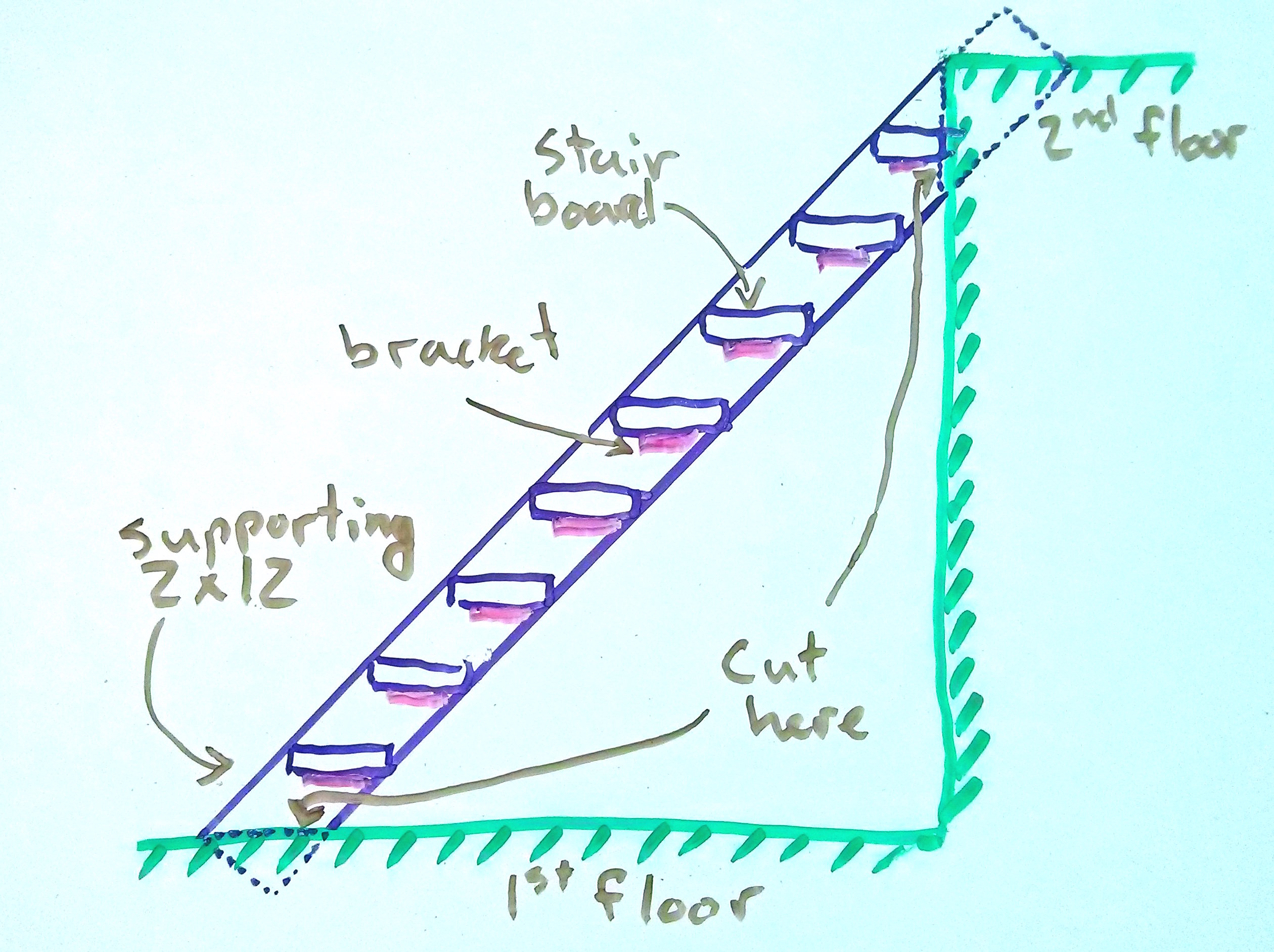
Consider building some basement stairs for a moment. Stairs seem pretty simple at first, and at a high level they are simple, just two long, wide parallel boards (2” x 12” x 16’), some boards for the stairs and an angle bracket on each side to hold up each stair. But as you actually start building you’ll find there’s a surprising amount of nuance.
考虑一下建造一些地下室的楼梯吧。楼梯起初看起来很简单,从高处看也很简单,只是两块长而宽的平行木板(2英寸×12英寸×16英尺),一些楼梯用的木板和每侧的角钢支架来支撑每个楼梯。但当你真正开始建造时,你会发现有很多令人惊讶的细微差别。
The first thing you’ll notice is that there are actually quite a few subtasks. Even at a high level, you have to cut both ends of the 2x12s at the correct angles; then screw in some u-brackets to the main floor to hold the stairs in place; then screw in the 2x12s into the u-brackets; then attach the angle brackets for the stairs; then screw in the stairs.
你会注意到的第一件事是,实际上有相当多的子任务。即使在高水平上,你也必须将2x12的两端切割成正确的角度;然后在主地板上拧入一些U型架,以固定楼梯;然后将2x12拧入U型架;然后连接楼梯的角架;然后拧入楼梯。
 |
Next you’ll notice that each of those steps above decomposes into several steps, some of which have some tricky details to them due to the properties of the materials and task and the limitations of yourself and your tools.
接下来你会注意到,上面的每一个步骤都会分解成几个步骤,其中有些步骤由于材料和任务的特性以及你自己和你的工具的限制,会有一些棘手的细节。
The first problem you’ll encounter is that cutting your 2x12s to the right angle is a bit complicated because there’s no obvious way to trace the correct angles. You can either get creative (there is a way to trace it), or you can bust out your trig book and figure out how to calculate the angle and position of the cuts.
你会遇到的第一个问题是,将你的2x12s切割成正确的角度是有点复杂的,因为没有明显的方法来追踪正确的角度。你可以发挥创造力(有一种方法可以追踪它),或者你可以拿出你的三角书,找出如何计算角度和切割的位置。
You’ll probably also want to look up what are reasonable angles for stairs. What looks reasonable when you’re cutting and what feels safe can be different. Also, you’re probably going to want to attach a guide for your circular saw when cutting the angle on the 2x12s because the cut has to be pretty straight.
你可能还想了解一下什么是楼梯的合理角度。当你切割时,什么看起来是合理的,什么感觉是安全的,可能是不同的。此外,当在2x12s上切割角度时,你可能要为你的圆锯附加一个指南,因为切割必须是非常直的。
When you’re ready to you will quickly find that getting the stair boards at all the same angle is non-trivial. You’re going to need something that can give you an angle to the main board very consistently. Once you have that, and you’ve drawn your lines, you may be dismayed to discover that your straight looking board is not that straight. Lumber warps after it’s made because it was cut when it was new and wet and now it’s dryer, so no lumber is perfectly straight.
当你准备好的时候,你会很快发现,让楼梯板处于所有相同的角度是非同寻常的事情。你将需要一些能让你与主板的角度非常一致的东西。一旦你有了这些,并且画好了线,你可能会沮丧地发现,你的直板看起来并不那么直。木材制成后会出现变形,因为它是在新的、潮湿的时候切割的,而现在它已经变干了,所以没有木材是完全直的。
Once you’ve gone back to the lumber store and gotten some straighter 2x12s and redrawn your lines, you can start screwing in your brackets. Now you’ll learn that despite starting aligned with the lines you drew, after screwing them in, your angle brackets are no longer quite straight because the screws didn’t go in quite straight and now they tightly secure the bracket at the wrong angle. You can fix that by drilling guide holes first. Also you’ll have to move them an inch or so because it’s more or less impossible to get a screw to go in differently than it did the first time in the same hole.
一旦你回到木材店,得到一些更直的2x12,并重新画线,你就可以开始拧支架了。现在你会了解到,尽管开始时与你画的线对齐,但在拧入后,你的角钢支架不再是很直的,因为螺丝没有很直地进入,现在它们以错误的角度紧紧地固定在支架上。你可以通过先钻导孔来解决这个问题。此外,你还必须把它们移开一英寸左右,因为要想让一颗螺丝钉在同一孔中的位置与第一次不同,多少是不可能的。
Now you’re finally ready to screw in the stair boards. If your screws are longer than 2”, you’ll need different ones, otherwise they will poke out the top of the board and stab you in the foot.
现在你终于准备好用螺丝钉固定楼梯板了。如果你的螺丝钉长于2英寸,你就需要不同的螺丝钉,否则它们会从木板的顶部探出,刺伤你的脚。
At every step and every level there’s an abundance of detail with material consequences.
在每一个步骤和每一个层次,都有丰富的细节,都有实质性的后果。
It’s tempting to think ‘So what?’ and dismiss these details as incidental or specific to stair carpentry. And they are specific to stair carpentry; that’s what makes them details. But the existence of a surprising number of meaningful details is not specific to stairs. Surprising detail is a near universal property of getting up close and personal with reality.
我们很容易认为 "那又怎样?"并将这些细节视为楼梯木工的附带或特定的细节。而它们确实是楼梯木工所特有的;这就是它们的细节所在。但数量惊人的有意义的细节的存在并不是楼梯所特有的。令人惊讶的细节是近距离接触现实的一个几乎普遍的属性。
You can see this everywhere if you look. For example, you’ve probably had the experience of doing something for the first time, maybe growing vegetables or using a Haskell package for the first time, and being frustrated by how many annoying snags there were. Then you got more practice and then you told yourself ‘man, it was so simple all along, I don’t know why I had so much trouble’. We run into a fundamental property of the universe and mistake it for a personal failing.
如果你看一下,你可以到处看到这种情况。例如,你可能有过这样的经历:第一次做某件事情,也许是种菜,或者第一次使用Haskell包,对有许多恼人的障碍感到沮丧。然后你得到了更多的练习,然后你告诉自己'伙计,它一直都很简单,我不知道为什么我有这么多麻烦'。我们遇到了宇宙的一个基本属性,并把它误认为是个人的失败。
If you’re a programmer, you might think that the fiddliness of programming is a special feature of programming, but really it’s that everything is fiddly, but you only notice the fiddliness when you’re new, and in programming you do new things more often.
如果你是一个程序员,你可能会认为编程的繁琐是编程的一个特点,但实际上是一切都很繁琐,但你只有在新的时候才会注意到这种繁琐,而在编程中你更经常做新的事情。
You might think the fiddly detailiness of things is limited to human centric domains, and that physics itself is simple and elegant. That’s true in some sense – the physical laws themselves tend to be quite simple – but the manifestation of those laws is often complex and counterintuitive.
你可能认为事物的繁琐细节只限于以人为中心的领域,而物理学本身是简单而优雅的。这在某种意义上是正确的--物理规律本身往往相当简单--但这些规律的表现往往是复杂和反直觉的。
Consider the boiling of water. That’s straightforward, water boils at 100 °C, right?
考虑一下水的沸腾。这很简单,水在100℃时就会沸腾,对吗?
Well the stairs seemed simple too, so let’s double check.
嗯,楼梯似乎也很简单,所以我们再检查一下。
Put yourself in the shoes of someone at the start of the 1800’s, with only a crude, unmarked mercury thermometer, trying to figure the physics of temperature.
设身处地地想一想,在19世纪初,有人只带着一支粗糙的、没有标记的水银温度计,试图弄清温度的物理学原理。
Go to your stove, put some water in a pot, start heating some water, and pay attention as it heats.
到你的炉子前,在锅里放一些水,开始加热一些水,在水加热时注意。
(I suggest actually doing this)(我建议真的这样做)
The first thing you’ll probably notice is a lot of small bubbles gathering on the surface of the pot. Is that boiling? The water’s not that hot yet; you can still even stick your finger in. Then the bubbles will appear faster and start rising, but they somehow seem ‘unboiling’. Then you’ll start to see little bubble storms in patches, and you start to hear a hissing noise. Is that Boiling? Sort of? It doesn’t really look like boiling. The bubble storms grow larger and start releasing bigger bubbles. Eventually the bubbles get big and the surface of the water grows turbulent as the bubbles begin to make it to the surface. Finally we seem to have reached real boiling. I guess this is the boiling point? That seems kind of weird, what were the things that happened earlier if not boiling.
你可能会注意到的第一件事是在锅的表面聚集了很多小气泡。这就是沸腾吗?水还没有那么热;你甚至还可以把手指伸进去。然后,气泡会出现得更快,并开始上升,但不知为何,它们似乎 "没有沸腾"。然后你会开始看到成片的小气泡风暴,你开始听到嘶嘶的声音。这就是沸腾吗?算是吧?它看起来并不像沸腾。气泡风暴越来越大,开始释放更大的气泡。最终,气泡变得很大,水的表面也变得很湍急,因为气泡开始上浮。最后,我们似乎已经达到了真正的沸腾。我猜这就是沸点?这似乎有点奇怪,如果不是沸腾,之前发生的事情是什么。
To make matters worse, if you’d used a glass pot instead of a metal one, the water would boil at a higher temperature. If you cleaned the glass vessel with sulfuric acid, to remove any residue, you’d find that you can heat water substantially more before it boils and when it does boil it boils in little explosions of boiling and the temperature fluctuates unstably.
更糟糕的是,如果你用的是玻璃锅而不是金属锅,水沸腾的温度会更高。如果你用硫酸清洗玻璃器皿,以去除任何残留物,你会发现在水沸腾之前,你可以大大加热水,而当它真的沸腾时,它的沸腾是小规模的爆炸,温度波动不稳定。
Worse still, if you trap a drop of water between two other liquids and heat it, you can raise the temperature to at least 300 °C with nothing happening. That kind of makes a mockery of the statement ‘water boils at 100 °C’.
更糟糕的是,如果你把一滴水夹在其他两种液体之间并加热,你可以把温度提高到至少300℃而什么都不发生。这使 "水在100°C时沸腾 "的说法成为一种嘲弄。
It turns out that ‘boiling’ is a lot more complicated than you thought.
事实证明,"沸腾 "比你想象的要复杂得多。
This surprising amount of detail is is not limited to “human” or “complicated” domains, it is a near universal property of everything from space travel to sewing, to your internal experience of your own mind.
这种令人惊讶的细节并不局限于 "人类 "或 "复杂 "的领域,它几乎是一切事物的普遍属性,从太空旅行到缝纫,到你对自己心灵的内部体验。
Again, you might think ‘So what? I guess things are complicated but I can just notice the details as I run into them; no need to think specifically about this’. And if you are doing things that are relatively simple, things that humanity has been doing for a long time, this is often true. But if you’re trying to do difficult things, things which are not known to be possible, it is not true.
同样,你可能会想'那又怎样?我想事情很复杂,但我可以在遇到这些细节时注意到它们;不需要特别考虑这个问题。如果你做的是相对简单的事情,是人类已经做了很久的事情,这往往是真的。但是如果你试图做困难的事情,做那些不知道是否可能的事情,那就不是真的了。
The more difficult your mission, the more details there will be that are critical to understand for success.
你的任务越困难,就会有更多的细节,这是成功的关键。
You might hope that these surprising details are irrelevant to your mission, but not so. Some of them will end up being key. Wood’s tendency to warp means it’s more accurate to trace a cut than to calculate its length and angle. The possibility of superheating liquids means it’s important to use a packed bed when boiling liquids in industrial processes lest your process be highly inefficient and unpredictable. The massive difference in weight between a rocket full of fuel and an empty one means that a reusable rocket can’t hover if it can’t throttle down to a very small fraction of its original thrust, which in turn means it must plan its trajectory very precisely to achieve 0 velocity at exactly the moment it reaches the ground.
你可能希望这些令人惊讶的细节与你的任务无关,但并非如此。其中一些最终会成为关键。木材的扭曲倾向意味着追踪切割比计算其长度和角度更准确。液体过热的可能性意味着在工业过程中沸腾液体时必须使用填料床,以免你的过程非常低效和不可预测性。装满燃料的火箭和空的火箭在重量上的巨大差异意味着,如果一个可重复使用的火箭不能把油门降到其原始推力的极小部分,就不能悬停,这反过来又意味着它必须非常精确地规划其轨迹,以便在到达地面的那一刻正好达到0速度。
 |
You might also hope that the important details will be obvious when you run into them, but not so. Such details aren’t automatically visible, even when you’re directly running up against them. Things can just seem messy and noisy instead. ‘Spirit’ thermometers, made using brandy and other liquors, were in common use in the early days of thermometry. They were even considered as a potential standard fluid for thermometers. It wasn’t until the careful work of Swiss physicist Jean-André De Luc in the 18th century that physicists realized that alcohol thermometers are highly nonlinear and highly variable depending on concentration, which is in turn hard to measure.
你可能还希望重要的细节在你碰上它们时是显而易见的,但并非如此。这样的细节并不是自动可见的,即使是在你直接碰到它们的时候。事情可能只是看起来很混乱和嘈杂。使用白兰地和其他酒类制造的 "精神 "温度计在温度测量的早期被普遍使用。它们甚至被认为是温度计的潜在标准液体。直到18世纪瑞士物理学家Jean-André De Luc的仔细工作,物理学家们才意识到酒精温度计是高度非线性的,并且根据浓度的不同而变化很大,而这又是难以测量的。
You’ve probably also had experiences where you were trying to do something and growing increasingly frustrated because it wasn’t working, and then finally, after some time you realize that your solution method can’t possibly work.
你可能也有过这样的经历:你试图做一件事,却因为没有成功而越来越沮丧,最后,经过一段时间后,你意识到你的解决方法不可能成功。
Another way to see that noticing the right details is hard, is that different people end up noticing different details. My brother and I once built a set of stairs for the garage with my dad, and we ran into the problem of determining where to cut the long boards so they lie at the correct angle. After struggling with the problem for a while (and I do mean struggling, a 16’ long board is heavy), we got to arguing. I remembered from trig that we could figure out angle so I wanted to go dig up my textbook and think about it. My dad said, ‘no, no, no, let’s just trace it’, insisting that we could figure out how to do it.
另一个方法是,不同的人最终会注意到不同的细节,这说明注意到正确的细节是很难的。我哥哥和我曾经和我爸爸一起为车库建造了一套楼梯,我们遇到了一个问题,就是如何确定在哪里切割长木板,以便它们以正确的角度放置。在纠结了一段时间后(我是说纠结,一块16英尺长的木板很重),我们开始争论。我记得在三角学中,我们可以算出角度,所以我想去挖出我的课本,想想这个问题。我爸爸说,"不,不,不,我们只是追踪它",坚持说我们可以想出办法来。
I kept arguing because I thought I was right. I felt really annoyed with him and he was annoyed with me. In retrospect, I think I saw the fundamental difficulty in what we were doing and I don’t think he appreciated it (look at the stairs picture and see if you can figure it out), he just heard ‘let’s draw some diagrams and compute the angle’ and didn’t think that was the solution, and if he had appreciated the thing that I saw I think he would have been more open to drawing some diagrams. But at the same time, he also understood that diagrams and math don’t account for the shape of the wood, which I did not appreciate. If we had been able to get these points across, we could have come to consensus. Drawing a diagram was probably a good idea, but computing the angle was probably not. Instead we stayed annoyed at each other for the next 3 hours.
我一直在争论,因为我认为我是对的。我对他感到非常恼火,他对我也很恼火。现在回想起来,我想我看到了我们所做的事情的根本困难,而我认为他没有领会到这一点(看看楼梯图,看看你能不能想出来),他只是听到'让我们画一些图,计算一下角度',不认为那是解决办法,如果他领会了我看到的事情,我想他会更愿意画一些图。但与此同时,他也明白,图表和数学并没有考虑到木材的形状,这一点我并不欣赏。如果我们能把这些观点说清楚,我们就能达成共识。画图可能是个好主意,但计算角度可能不是。相反,在接下来的3个小时里,我们一直在为对方感到恼火。
Before you’ve noticed important details they are, of course, basically invisible. It’s hard to put your attention on them because you don’t even know what you’re looking for. But after you see them they quickly become so integrated into your intuitive models of the world that they become essentially transparent. Do you remember the insights that were crucial in learning to ride a bike or drive? How about the details and insights you have that led you to be good at the things you’re good at?
在你注意到重要的细节之前,它们当然基本上是看不见的。你很难把你的注意力放在它们身上,因为你甚至不知道你在寻找什么。但在你看到它们之后,它们很快就融入了你对世界的直觉模型,以至于它们基本上变得透明。你还记得在学习骑自行车或开车时那些至关重要的见解吗?你拥有的导致你擅长的事情的细节和洞察力如何?
This means it’s really easy to get stuck. Stuck in your current way of seeing and thinking about things. Frames are made out of the details that seem important to you. The important details you haven’t noticed are invisible to you, and the details you have noticed seem completely obvious and you see right through them. This all makes makes it difficult to imagine how you could be missing something important.
这意味着它真的很容易被卡住。困在你目前看待和思考事物的方式中。框架是由那些对你来说似乎很重要的细节组成的。你没有注意到的重要细节对你来说是看不见的,而你已经注意到的细节似乎完全是显而易见的,你直接看穿了它们。这一切使得你很难想象你怎么会错过重要的东西。
That’s why if you ask an anti-climate change person (or a climate scientist) “what could convince you you were wrong?” you’ll likely get back an answer like “if it turned out all the data on my side was faked” or some other extremely strong requirement for evidence rather than “I would start doubting if I noticed numerous important mistakes in the details my side’s data and my colleagues didn’t want to talk about it”. The second case is much more likely than the first, but you’ll never see it if you’re not paying close attention.
这就是为什么如果你问一个反气候变化的人(或一个气候科学家)"什么可以说服你是错的?"你很可能得到这样的答案:"如果事实证明我这边的所有数据都是伪造的 "或其他一些极其强烈的证据要求,而不是 "如果我注意到我这边的数据细节有许多重要错误,而我的同事却不想谈论它,我就会开始怀疑。第二种情况比第一种情况更有可能,但如果你不密切注意,你永远不会看到。
If you’re trying to do impossible things, this effect should chill you to your bones. It means you could be intellectually stuck right at this very moment, with the evidence right in front of your face and you just can’t see it.
如果你想做不可能的事情,这种效果应该让你感到骨子里的寒冷。这意味着你此刻可能在智力上被卡住了,证据就在你面前,而你就是看不到。
This problem is not easy to fix, but it’s not impossible either. I’ve mostly fixed it for myself. The direction for improvement is clear: seek detail you would not normally notice about the world. When you go for a walk, notice the unexpected detail in a flower or what the seams in the road imply about how the road was built. When you talk to someone who is smart but just seems so wrong, figure out what details seem important to them and why. In your work, notice how that meeting actually wouldn’t have accomplished much if Sarah hadn’t pointed out that one thing. As you learn, notice which details actually change how you think.
这个问题不容易解决,但也不是不可能。我已经为自己解决了大部分问题。改进的方向很明确:寻找你通常不会注意到的世界的细节。当你去散步时,注意一朵花中意想不到的细节,或者道路上的接缝暗示着道路是如何建造的。当你和一个聪明但看起来很不对劲的人谈话时,弄清楚哪些细节对他们来说很重要,为什么?在你的工作中,注意到如果莎拉没有指出那件事,那次会议实际上不会有什么成果。当你学习时,注意哪些细节实际上改变了你的思维方式。
If you wish to not get stuck, seek to perceive what you have not yet perceived.
如果你想不被卡住,就寻求感知你尚未感知的东西。